
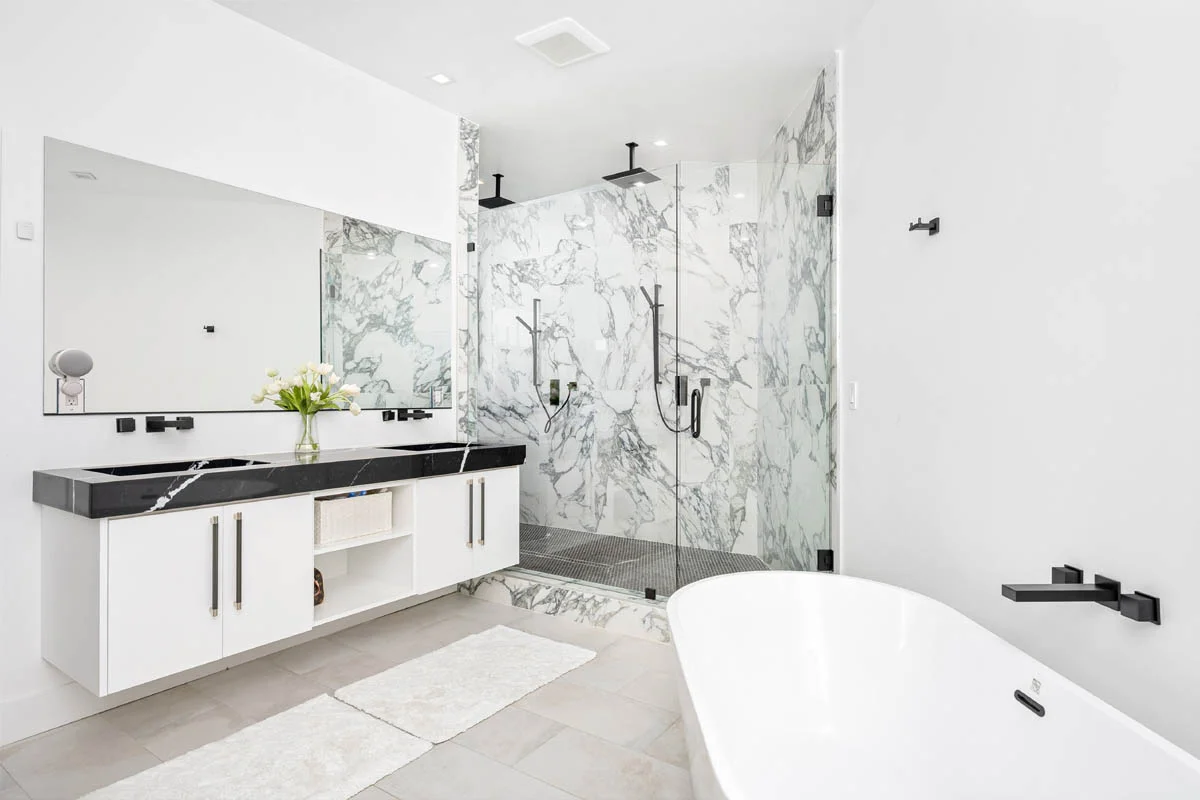
To plan a bathroom renovation, start by defining your goals, then set a realistic budget with a 10–20% contingency, choose your project scope, confirm permit requirements, finalize your design, and hire a licensed contractor before any demolition begins. At RWB Construction in Lafayette, CA, we guide homeowners through this process every day as part of our bathroom remodeling service. A bathroom is one of the smallest rooms in your house, but it is also one of the most complex. Plumbing, electrical work, waterproofing, ventilation, and tile all come together in a tight space, and a mistake in one area can affect all the others. Good planning protects your budget, your schedule, and your daily routine. The sections below walk you through each decision in the order it should be made.

Start With Clear Goals and Priorities
Before you look at tile samples or fixtures, ask yourself why you want to renovate. Some homeowners are fixing leaks, mold, or water damage. Others want to replace outdated finishes, gain storage, improve safety, or add value before selling. Many simply want a calm, spa-like room to start and end the day.
Write your goals down and rank them. If safety and function come first, you may choose to invest more in waterproofing and a walk-in shower than in decorative finishes. Ranking your priorities gives you a clear filter when the budget gets tight, and it helps your contractor understand what matters most to you.
Set a Realistic Budget
Budget is where many bathroom projects go off track. Costs vary widely by city, room size, and material choices. In the Bay Area, labor and material costs run higher than in many other regions, so national averages found online can be misleading. The most reliable approach is to request a written, itemized estimate from a licensed contractor.
A complete budget should account for demolition and debris removal, plumbing and electrical updates, waterproofing, framing and drywall, tile and flooring, fixtures, lighting, ventilation, painting, and permit fees. Many homeowners forget the smaller items, such as door hardware, mirrors, and towel bars, which can add up quickly.
Always set aside a contingency fund of 10–20% of the total budget. Once the walls are opened, contractors sometimes discover hidden problems such as rotted subflooring, outdated pipes, or old wiring. A contingency fund turns those surprises into manageable decisions instead of emergencies.
Choose the Right Scope for Your Project
Not every bathroom needs a full gut renovation, and choosing the right scope is one of the best ways to control cost. A cosmetic refresh keeps the existing layout and updates surface items like paint, lighting, mirrors, hardware, and sometimes the vanity. It is the fastest and most affordable option.
A full remodel replaces nearly everything, including tile, the tub or shower, flooring, fixtures, and often the vanity, while keeping the current layout. This is the most popular choice for homeowners who want a fresh, complete result without major structural work.
A layout change is the most involved option. It means moving the toilet, shower, or sink, or expanding the room into a nearby closet or hallway. Because plumbing lines, framing, and permits are all affected, this option costs more and takes longer.
Your bathroom may also be part of a larger plan. Many homeowners pair it with kitchen remodeling to save on setup costs and keep the style consistent throughout the house. If you are adding a bathroom to a backyard unit, our Accessory Dwelling Unit services can handle that from the ground up. And if you are planning a brand-new home, bathrooms are best designed at the blueprint stage, which is how we approach new construction.

Understand Permits and Building Codes
Permits are more than paperwork. They exist to make sure the work is safe and built to code. In California, projects that involve plumbing changes, new electrical circuits, structural work, or layout changes generally require a permit from your local building department. A simple cosmetic update often does not, but rules vary by city and county, so it is wise to confirm with your local office or your contractor before you begin.
Several code points are worth knowing. Bathrooms need proper ventilation, and exhaust fans should vent to the outdoors rather than into the attic. Outlets near water must be protected by ground-fault circuit interrupters. California also sets water-efficiency standards for toilets, faucets, and showerheads. In homes built before 1978, lead-based paint may be present, which calls for certified lead-safe work practices under federal EPA rules.
Skipping permits can create serious problems later, including failed inspections, insurance disputes, and complications when you sell your home. At RWB Construction, permits are included in our process, and we make sure your project passes inspection from start to finish.
Plan the Layout and Design Carefully
Once your scope and budget are set, the creative work begins. Good bathroom design balances style with everyday function.
Start with the layout. Measure the room and note where the plumbing runs. Keeping the toilet, sink, and shower close to their current positions usually saves money. Think about door swings, walking clearances, and how two people might use the space at the same time.
Next, decide between a tub and a shower. Many homeowners now replace a rarely used tub with a larger walk-in shower. If you have young children or plan to sell in the near future, keeping at least one tub in the home is worth considering.
Material choice matters just as much. Porcelain and ceramic tile handle moisture well, and slip-resistant flooring adds safety. Large-format tile means fewer grout lines and easier cleaning. Quartz and solid-surface countertops resist stains better than many natural stones.
Lighting deserves its own plan. Combine overhead lighting with task lighting at the mirror, and add a dimmable option for evenings. Storage should be planned early too, since recessed niches, medicine cabinets, and vanity drawers keep clutter off the counters. If you plan to stay in your home for many years, consider adding extra blocking inside the walls so grab bars can be installed later without opening them again.
If you are unsure where to begin, working with a team that offers both design and construction can save a great deal of time. An in-house design team helps you build a cohesive style, select durable materials, and order everything in the right sequence, which reduces miscommunication and delays.
Hire a Licensed and Trusted Contractor
Your contractor has more influence on the final result than any tile or fixture. Take your time and compare more than price.
Begin by verifying the contractor’s license with the California Contractors State License Board. Then confirm that the company carries insurance and bonding, which protects you if something goes wrong on the job. Ask for local references and photos of completed bathrooms similar to yours. A professional contractor should also provide a detailed written proposal that spells out the scope, materials, timeline, and payment schedule.
It also helps to ask who will manage your project and how often you will receive updates. Communication is often the difference between a smooth renovation and a stressful one. Finally, ask about warranties on workmanship, since they show how much a company stands behind its work.
Be cautious of bids that are far lower than the rest. They often leave out items that show up later as change orders. A transparent proposal may cost more at the start, but it usually costs less in the end. RWB Construction is a licensed, bonded, and insured contractor, and our project managers prepare a custom proposal with a detailed scope of work so you know exactly what to expect before we begin.

Build a Realistic Timeline
A full bathroom remodel commonly takes several weeks once construction begins, although the exact duration depends on the scope, material availability, and inspection schedules. Custom vanities, specialty tile, and imported fixtures can take weeks to arrive, so ordering early is essential.
The process usually begins with final design decisions and material selection, followed by ordering and confirming delivery dates. After permits are approved, where required, demolition and rough-in work for plumbing and electrical can start. Framing, waterproofing, and inspections come next, followed by tile, flooring, and cabinetry installation. The final stages include fixtures, lighting, painting, a final inspection, and a walkthrough with your contractor.
Ask your contractor to confirm that all materials are on site before demolition starts. Waiting for a missing part is one of the most common reasons a bathroom sits unfinished for longer than expected.
Prepare Your Home and Family
Living through a remodel takes a little planning. If the bathroom you are renovating is the only one in your home, talk with your contractor about temporary arrangements, or consider staying elsewhere for a short period.
Clear out all personal items and toiletries before work begins, and protect floors and furniture in nearby hallways. Set up a dust-free area for children and pets, and agree on work hours and home access with your contractor. It also helps to choose one person in your household as the main point of contact, so questions get answered quickly and instructions do not get mixed up.
Common Mistakes to Avoid
Several mistakes appear again and again in bathroom projects. Poor waterproofing behind tile is one of the most costly, because it can lead to mold and structural damage that only shows up months later. Ignoring ventilation is another, since trapped moisture damages paint, drywall, and cabinets over time.
Some homeowners choose style over function and end up with a beautiful shower that is difficult to clean. Others underestimate the budget and skip the contingency fund. Changing your mind in the middle of construction is also expensive, because late changes create delays and additional charges. Finalize your decisions before work starts, and always verify a contractor’s credentials before signing anything.

Final Thoughts
Planning a bathroom renovation comes down to a handful of smart decisions made in the right order. Define your goals, set a realistic budget with room for surprises, choose the right scope, confirm your permits, design for both beauty and function, and hire a contractor you can trust. When these steps are done well, the construction phase becomes smoother, faster, and far less stressful.
If you are ready to get started, RWB Construction is here to help homeowners in Lafayette and across the Bay Area. From design to construction, our licensed team will guide you through every step. Visit us at 1080 Carol Ln, Suite #106, Lafayette, CA 94549; call (925) 444-3008; or request a free quote through our website today.


